Posts

Showing posts with the label UK

Floods and droughts are both signs of water insecurity – they show up in these four places

Image
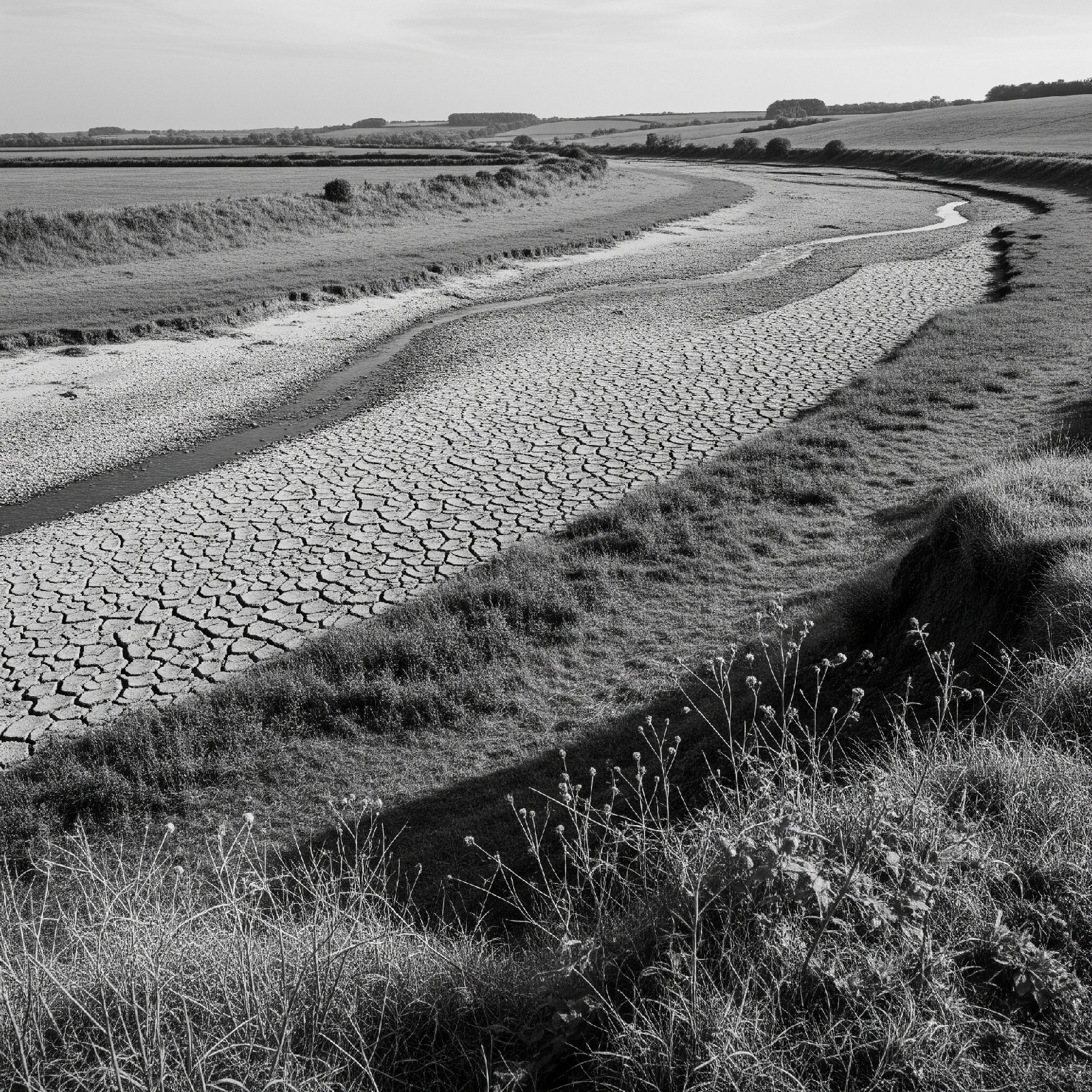
Aerial shot of a flooded landscape with trees and farmland under a bright blue sky. This article is republished from The Conversation under a Creative Commons license. Read the original article . Author: Hannah Cloke , University of Reading After the UK’s hottest ever summer on record, when much of the country has experienced a fraction of its normal levels of rain, many regions continue to be in drought. This water crisis has led to parched reservoirs and widespread hosepipe bans. Yet early autumn heat has been making way for some serious downpours . While the country desperately needs rain to break the drought, we are also facing a future where warmer, wetter winters are putting millions more people, homes and infrastructure in the way of potentially damaging floods. Have we got too much, or too little water? Drought and flooding are not opposite emergencies. They are two consequences of an imperfect and misunderstood water system. By looking at four places where our lives d...

The UK Solar Revolution: Plug-In Solar Panels Are Finally Legal

Image
AI Generated representation of Plug-In solar PV on a UK balcony For years, generating your own green energy in the UK was a privilege reserved for homeowners with large, south-facing roofs and the spare capital for a major installation. Renters, flat-dwellers, and those with small gardens were effectively locked out of the solar boom. But as of 27 August 2026, the market has completely changed. A groundbreaking update to UK regulations means that "plug-in" solar panels (often called balcony solar) are now entirely legal to buy and use across Great Britain. If you are looking for a low-cost, zero-construction way to cut your carbon footprint and lower your electricity bills, this is the update you have been waiting for. Here is everything you need to know about the new rules, the hardware, and whether a plug-in kit is right for your home. What Exactly is a Plug-In Solar Panel? A plug-in solar kit is a miniaturised version of a traditional rooftop array. Instead of re...

Can Desalination Solve the UK’s Drought Crisis?

Image
For an island nation famous for grey skies and drizzle, the concept of a water shortage feels counterintuitive. Yet, as consecutive heatwaves and prolonged dry spells push reservoir levels down and trigger hosepipe bans and abstraction restrictions across multiple regions, water security has moved firmly to the top of the national agenda. With chalk streams under pressure and river levels dropping, the question inevitably resurfaces: why aren't we turning the sea around us into drinking water? Can we use water from the sea to avoid drought restrictions in the UK? The UK’s Desalination Landscape Desalination remains remarkably rare in the UK. The country’s sole large-scale mainland plant is the Thames Gateway Water Treatment Works in Beckton, East London. Commissioned in 2010 to provide up to 150 million litres of water a day during extreme dry periods, the plant treats brackish water from the tidal Thames using reverse osmosis. Beyond Beckton, desalination is limited to nich...

The Death of the Four Seasons: Britain’s Shift to a Binary Climate

Image
If you have looked out of the window recently and felt that the calendar no longer matches the weather, you are not imagining it. For centuries, life in the UK has been dictated by a reliable, quadriseasonal rhythm: a distinct spring, summer, autumn, and winter. But meteorological data and emerging scientific consensus suggest this model is collapsing. We are currently witnessing a structural reclassification of British seasonality, moving away from four temperate seasons towards a "binary climatological regime" defined by two extremes: a wet season and a dry season. The Squeeze: How Winter and Summer are Taking Over The most profound change is the compression of our transitional seasons. As the planet heats up, the UK is warming and extremes are increasing. Observations reveal that our traditional seasons are becoming increasingly disconnected from their definitions as human-driven climate disruption alters Earth’s annual rhythms. Consequently, we are seeing the emer...

How 30 Years of Failed Transport Policy Fuelled the UK's Environmental Crisis

Image
For decades, the UK has talked a good game on climate change . We set ambitious targets and congratulate ourselves on decommissioning coal. Yet, one sector remains a stubborn, polluting stain on our record: transport . Transport is now the single largest source of greenhouse gas emissions in the UK , accounting for over a quarter of our entire carbon footprint. Why? Because for the last 30 years, a series of disastrous, ideologically-driven government policies have deliberately and effectively sabotaged the green alternative. We didn't just fail to build a good public transport system; we systematically broke the one we had, forcing millions of people into their cars. The result isn't just a national "mess"; it's a 30-year environmental missed opportunity that has cost us dearly. Making the Green Choice the Most Expensive Choice The fundamental flaw in UK transport policy is this: it makes the sustainable choice the most difficult, unreliable, and outr...

Summer 2025: A New Chapter in UK Weather History

Image
The UK has officially sealed a new record, as the Met Office confirms that summer 2025 will almost certainly be the warmest on record. This isn't just about a few scorching days; it's a story of consistent, pervasive warmth that has redefined what a British summer feels like. Source: Met Office Provisional statistics from the Met Office reveal that the mean temperature for the UK from June 1st to August 25th was a staggering 16.13°C . This comfortably surpasses the previous record of 15.76°C , which was set in 2018. As Met Office scientist Emily Carlisle pointed out, it would require a highly improbable plunge in temperatures to prevent this summer from claiming the top spot. The most striking aspect of this summer is its consistent warmth, not a single, extreme heatwave. While many of us remember the iconic summer of 1976 for its intense and prolonged heat, with temperatures peaking above 32°C for 16 days, summer 2025's story is different. This year saw four distinct bu...

Heat Pump Update for UK Homeowners: 2025 Outlook

Image
For UK homeowners considering a heat pump installation in 2025, significant updates to government support and planning regulations aim to make the transition to low-carbon heating more accessible and affordable. The following key information provides an updated outlook: Government Grants and Financial Support The Boiler Upgrade Scheme (BUS) continues to be a cornerstone of government support. As of 2025, the grant amounts remain consistent: £7,500 for air source heat pumps (ASHPs) £7,500 for ground source heat pumps (GSHPs) £5,000 for biomass boilers The scheme has received an additional £1.5 billion in funding, extending its availability until March 2028, demonstrating a sustained commitment from the government to encourage heat pump adoption. A notable change in eligibility, effective from May 2024, is the removal of the requirement for properties to have no outstanding recommendations for loft or cavity wall insulation to...

Nuclear energy is a risky investment, but that’s no reason for the UK government to avoid it

Image
Renaud Foucart , Lancaster University The UK government’s investment of around £14 billion in a new nuclear power plant marks a big economic shift for the country’s approach to energy. The Sizewell C plant in Suffolk will be the second of a new generation of reactors to be built in the country, after Hinkley Point C in Somerset, which is expected to open in 2031 . French energy firm EDF is building Hinkley and will probably end up building Sizewell too . But it seems that the British government is finally prepared to take on the considerable financial risk which these projects bring. Previously it has preferred to look elsewhere. China, notably, has a longstanding appetite for investment in British infrastructure. (Although in 2022, the UK government bought back China’s stakes in Sizewell C amid geopolitical concerns.) But the money has to come from somewhere. And after EDF announced it wanted to limit its participation in Sizewell C – and in particular, exposure to the ris...

The UK's Trajectory Towards Hotter Summers

Image
  The British summer, traditionally a mix of sunshine and rain, is undergoing a significant shift. A recent and serious report from the Met Office, titled "Rapidly increasing chance of record UK summer temperatures," presents a clear picture of our future climate. It reveals a swift increase in the likelihood of extreme heat across the United Kingdom. This isn't just about a few warmer days; it's about a fundamental change that requires immediate attention and preparation. The 40°C Barrier: A New Reality For generations, temperatures above 40°C in the UK seemed unlikely, more common in hotter countries. However, in July 2022, that temperature was reached. Coningsby in Lincolnshire recorded an unprecedented 40.3°C. This event served as a clear warning about the changing climate here. What was once an extreme outlier is now part of a worrying trend. The Met Office's analysis shows how quickly this situation is evolving. The chance of the UK experiencing temper...

The UK's Thirsty Spring: A Call to Action as Drought Grips the Nation

Image
As meteorological summer officially begins, the UK finds itself in the grip of drought conditions, following a spring that has shattered records for dryness and sunshine. From parched fields to dwindling reservoir levels, the impact is being felt across the country, prompting urgent action from water companies and a plea for public cooperation. A Spring Like No Other: Record Dryness and Unprecedented Sunshine This spring has been nothing short of exceptional, but not in a way that brings comfort. The Met Office has confirmed that Spring 2025 is officially the UK's sunniest on record, surpassing the previous record set during the 2020 lockdown. While delightful for those seeking sunshine, this relentless brightness has been coupled with alarmingly low rainfall. Many regions have experienced significantly below-average rainfall, with March being the driest across England since 1961, and April receiving just half its typical total. The North West of England, in particular,...

Why Was Storm Babet So Severe and Why the UK Can Expect More Similar Storms in the Future

Image
Source: Met Office Storm Babet was the second named storm of the autumn season in 2023, and it brought widespread disruption and damage to the UK from 18 to 21 October. The storm was caused by two low-pressure systems that merged over the British Isles, bringing heavy rain and strong winds from an unusual south-easterly direction. In this blog post, we will explore why Storm Babet was so severe and whether the UK can expect more severe storms in the future. The severity of Storm Babet Storm Babet was severe for several reasons. First, it affected a large area of the UK, especially Scotland and northern and eastern England, where it dumped up to 250mm of rain in some places, more than double the average rainfall for October. This caused widespread flooding, especially in eastern Scotland, where a red "danger to life" warning was issued by the Met Office. Hundreds of homes were submerged, roads were closed, and power supplies were cut off. Seven people lost their lives due to t...