The Great Decoupling: How the Hormuz Crisis is Building a Post-Chokepoint World
For decades, global energy security was a house of cards held together by a 21-mile-wide stretch of water. In April 2026, that house finally collapsed. With the Strait of Hormuz remaining closed, the "doomsday" predictions of $170 oil and paralyzed supply chains have dominated the news.
But beneath the surface of this geopolitical shock, something remarkable is happening. The world isn't just reacting to a shortage; it is fundamentally re-engineering the concept of power. We are moving past the era of "Bridge Fuels" and entering the era of Energy Sovereignty.

1. The Death of the "Bridge" and the Birth of the SMR
For years, Liquefied Natural Gas (LNG) was marketed as the "bridge fuel" that would carry us from coal to renewables. The closure of the Strait has effectively dynamited that bridge. With 20% of global LNG trapped, the world has realized that gas is only as "clean" and "reliable" as the route it travels.
In its place, Small Modular Reactors (SMRs) have transitioned from experimental blueprints to national security priorities.
- Base Load Without the Baggage: Unlike massive traditional nuclear plants that take decades to build, SMRs are being fast-tracked in industrial zones.
- The 2026 Surge: Nations like Poland, Japan, and the UK are deploying SMRs to provide the steady "base load" that gas once provided, allowing the grid to stay stable while we ramp up intermittent renewables.
2. Offshore Wind: The Atlantic’s Answer to the Gulf
If the Middle East was the "Oil Tanker" of the 20th century, the North Sea and the Atlantic Coast are becoming the "Power Plants" of the 21st.
- The Wind Shift: High oil prices have made the massive capital expenditure of offshore wind and high-altitude wind kites suddenly look like a bargain.
- Decoupling from Geography: By harvesting the consistent, high-velocity winds of the open ocean, Europe and North America are creating a "Domestic Hormuz" - an energy source that no blockade can touch.
3. The IMEC and the Hydrogen Backbone
One of the most ambitious responses to the crisis is the acceleration of the India-Middle East-Europe Economic Corridor (IMEC). Originally a trade route, it is being redesigned as the world’s first Hydrogen Highway.
- The H2 Currency: With the sea routes compromised, the focus has shifted to Green Hydrogen produced by solar arrays in the Indian and Arabian deserts.
- Bypassing the Water: Instead of shipping volatile fuels through chokepoints, the IMEC is laying thousands of miles of pipeline to move hydrogen directly from the sun-drenched "Global South" to the industrial "Global North." It is a literal umbilical cord of green energy that bypasses the Strait of Hormuz entirely.
4. The Solar-Water Nexus: Desalination’s New Dawn
In the Middle East, the closure of the Strait created an immediate existential threat: Water. Historically, desalination plants were gas-fired behemoths. Without gas, the taps threatened to run dry.
This has sparked a "Manhattan Project" for Solar-Oriented Desalination.
- Direct-Drive Solar Desal: We are seeing a move away from the grid entirely. New plants are being built with integrated "Solar-to-Water" technology, using PV arrays to drive Reverse Osmosis (RO) membranes directly.
- Brine as a Resource: Innovation in 2026 is even turning the "waste" brine from these solar plants into a source of lithium and minerals for the very batteries that store the solar power. It is a perfect, circular economy born of necessity.
5. Solar PV: The Frontline of Defense
For those of us working in Solar PV, the narrative has shifted. We are no longer just "green." We are the frontline of resilience.
- The BESS Revolution: In this high-price environment, a solar panel without a Battery Energy Storage System (BESS) is considered half-finished. We are seeing a massive surge in "Long-Duration Energy Storage"- iron-air and flow batteries that can keep a city running for days, not just hours.
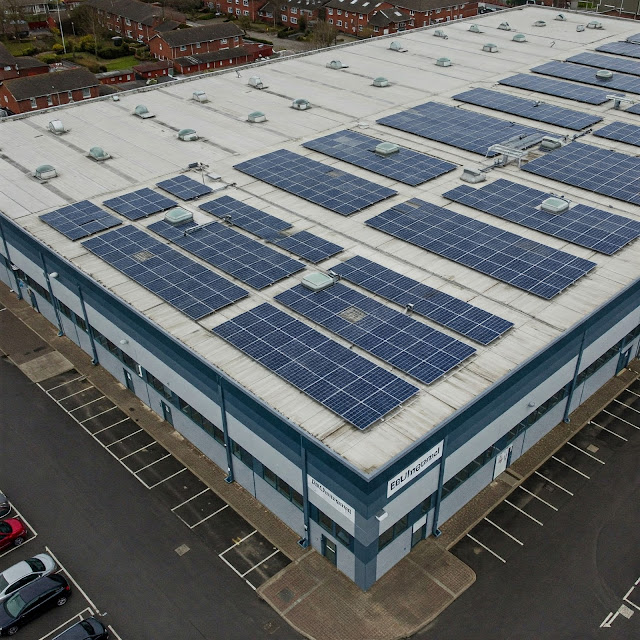
- Hyper-Localization: The goal is no longer a "Global Grid," but a "Grid of Grids." Micro-generation at the warehouse, school, and neighborhood level means that even if a global chokepoint is closed, the lights - and the internet - stay on.
The New Equilibrium
Crises are the midwives of progress. The closure of the Strait of Hormuz is a painful, expensive, and dangerous event. But it has provided the world with the one thing diplomacy couldn't: The ultimate incentive to leave the 20th century behind.
The "New Equilibrium" isn't just about finding more oil; it's about realizing we don't need it. Through the combination of Solar PV, SMRs, Wind, and the Hydrogen-rich corridors of the IMEC, we are building a world that is block-proof, chokepoint-proof, and carbon-proof.
The sun is rising on a world that no longer needs to fight over a 21-mile stretch of water.


Comments
Post a Comment