The Invisible Revolution: How BIPV is Turning Our Buildings into Power Stations

This isn't science fiction. This is Building-Integrated Photovoltaics (BIPV), a revolutionary approach to construction that embeds solar technology directly into the fabric of our buildings. As the UK pushes towards its net-zero targets, BIPV is moving from a niche concept to a mainstream solution.
The global BIPV market is a clear indicator of this shift. Market analysts, including a report from Fortune Business Insights, project the sector will grow significantly, forecasting it to reach over £59 billion ($74 billion) by 2032. This technology is no longer a question of "if," but "when."
What Exactly is BIPV (and what is it not)?
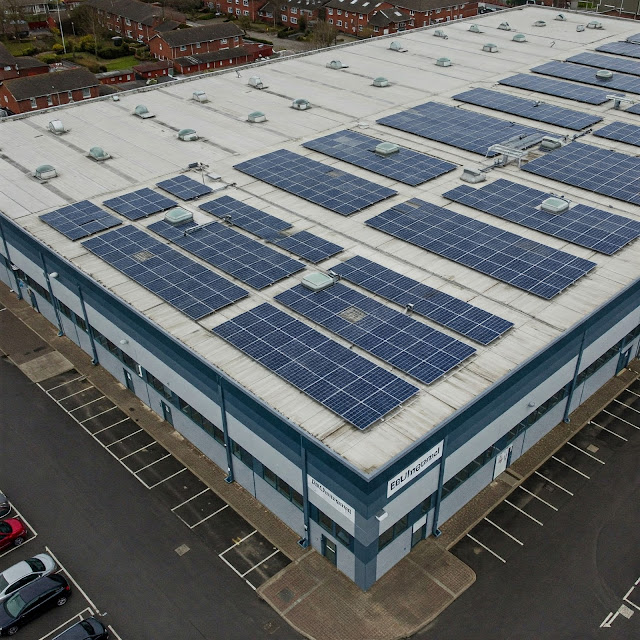
It's important to understand a key distinction. Most solar you see on homes is BAPV, or Building-Applied Photovoltaics. This is where panels are "applied" to an existing roof using a mounting system.
BIPV, by contrast, replaces a conventional building material. It serves a dual purpose: it acts as the building's protective skin (like a roof tile or a window) and it generates electricity.
- BAPV (Applied): Panels are added on.
- BIPV (Integrated): The material is the panel.
This integration is the game-changer, allowing every sun-facing surface of a building to become a potential power source.
The Different Faces of BIPV
BIPV technology is versatile and can be incorporated in several ways, each with its own benefits and challenges.
1. Solar Roofs (Tiles and Shingles)
Instead of large panels, solar tiles are designed to look like and replace traditional slate or terracotta tiles.
- How it works: Each tile is a mini-solar panel. When installed across a roof, they create a seamless, power-generating surface.
- The UK Context: This is perhaps the most exciting area for residential BIPV. For homeowners in conservation areas, where planning rules demand installations have a minimal visual impact, traditional panels can be problematic. Solar tiles offer an aesthetically pleasing, low-profile alternative that can often meet these stricter guidelines.
- Cost vs Efficiency: There is a trade-off. UK analysis from sites like The Eco Experts shows that a typical 4kW solar tile system might cost £10,000 - £14,000, compared to around £7,000 for a 4kW BAPV system. Their efficiency is also slightly lower (10-23%) than top-tier panels (18-25%). However, you are also getting a brand-new, high-performance roof, so the costs are often offset in a new build or re-roofing project.

2. Solar Facades (The 'Solar Skin')
This involves integrating PV modules into the vertical walls of a building. These can be opaque panels that serve as rainscreen cladding or spandrel panels (covering the areas between floors).
- How it works: They turn the vast, untapped vertical space of office blocks and apartment buildings into power generators.
- The UK Context: While vertical surfaces get less direct sun than a roof, they are surprisingly effective in winter when the sun is low in the sky—a key benefit for the UK's energy needs.
- Global Example: The Copenhagen International School in Denmark is a world-famous example. It's covered in 12,000 sea-blue solar panels that function as the building's facade, providing over 50% of its energy.
3. Solar Glass (Transparent & Semi-Transparent PV)
This is where the technology feels most futuristic. Solar cells are embedded within glass, allowing windows, skylights, and glass atriums to generate power.
- How it works: These panels are semi-transparent, so they strike a balance between letting visible light through and capturing energy.
- The UK Context: You have likely already seen this without realising it. The manufacturer Polysolar, for example, has installed transparent BIPV canopies at locations like the Cambridge North railway station cycle park and on several Sainsbury's petrol station forecourts.
- Cost vs Efficiency: This technology currently has the lowest efficiency, often between 5-15%. You sacrifice power generation for transparency. However, it generates electricity from a surface that could never do so before, while also providing shading and reducing cooling costs.
The Big Picture: Pros and Hurdles
BIPV offers a transformative vision for our cities, but it's important to be balanced.
The Advantages
- Aesthetic Integration: The main benefit. BIPV is discreet and can be beautifully integrated into any architectural design.
- Dual Function: It saves on traditional material costs. Why buy a roof tile and a solar panel when you can buy one product that does both?
- Space Maximisation: It allows energy generation on every part of the building envelope, which is crucial for dense urban areas.
The Hurdles
- High Initial Cost: This is the primary barrier. BIPV products are more expensive upfront than their traditional BAPV counterparts.
- Efficiency Trade-off: At present, most BIPV products are less efficient per square metre than a dedicated, optimally-angled solar panel.
- Complex Installation: Installing a BIPV roof or facade requires specialist skills and is more complex than a standard panel installation.
The UK Context: From Lab to Living Room
This technology is being actively developed and deployed right here in the UK.
A fantastic example is the "Active Homes" project in Neath, Wales. Developed by Swansea University's SPECIFIC Innovation and Knowledge Centre, these homes are designed to be "buildings as power stations."
They combine multiple BIPV technologies, including:
- A thin-film solar roof integrated directly into the steel roofing.
- Wall-mounted solar collectors that generate electricity and heat.
- PV-integrated windows.
Based on the success of a proven 'Active Classroom' prototype, these homes were designed to generate more energy than they consume over the year, proving that this concept is a powerful solution for the UK's housing and climate goals.
Final Thoughts
Building-Integrated Photovoltaics (BIPV) represents a fundamental shift in how we design our homes and cities. It moves solar power from being a clunky 'add-on' to an invisible, elegant, and essential part of the building itself.
While the upfront costs and specialist knowledge are still significant hurdles, the technology is advancing at a rapid pace. As we strive to decarbonise our built environment, BIPV is a key tool that will allow our buildings to work for us, silently powering our lives from the very surfaces that shelter us.
What do you think? As BIPV becomes more common, would you be more tempted by discreet solar tiles or power-generating windows for your own home? Or is the cost still the main barrier to adoption?
Let us know your thoughts in the comments below.


Comments
Post a Comment